

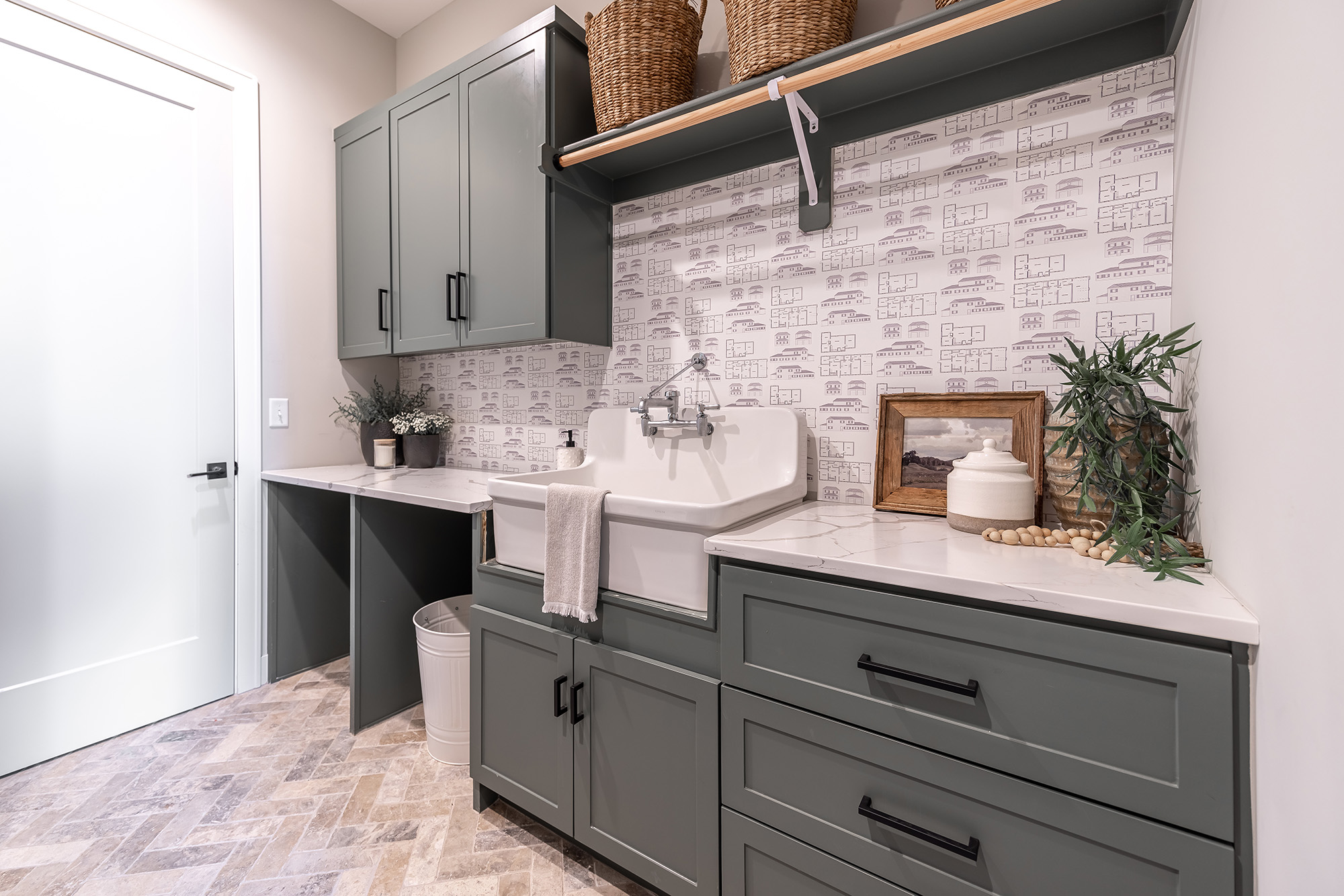
Southwest Florida laundry rooms and garage entryways take continuous abuse from pool towels, dripping swimwear, and plumbing runoff. Small utility spaces across Fort Myers and Naples sit directly on concrete slab foundations, where trapped moisture and water spills quickly seep into wall framing or surrounding rooms. You can protect these hard-working areas by choosing water-impervious flooring materials and sealing the room perimeter against unexpected leaks.
The Garage-to-Kitchen Mudroom Reality
Most coastal floor plans place the laundry room directly between the garage and the main living area. This tight pass-through serves as your home's primary landing zone, catching damp shoes, sandy beach gear, and wet paws before anyone steps into the kitchen.
Because this small space handles heavy daily foot traffic along with active washing machines, the floor faces two distinct threats at once: surface abrasion from tracked-in sand and continuous exposure to standing water. Standard materials like unsealed laminate or carpet fail quickly in these conditions, leading to swollen board edges and trapped odors.
Porcelain Tile Stops Moisture Infiltration at the Slab
Washing machines, water heaters, and utility sinks present constant risks for plumbing failures or slow, hidden leaks. Water pooling under an appliance on a porous surface eventually penetrates the subfloor, creating unseen dampness inside enclosed utility rooms.
Porcelain tile creates a solid moisture barrier over your concrete foundation:
Zero Water Absorption: Formulated from dense clay and fired at extreme heat, porcelain repels liquids completely, keeping water on the surface where you can wipe it up.
Safe Wet Traction: Matte or textured porcelain finishes give you crucial slip resistance when stepping inside with wet shoes or heavy laundry baskets.
Scratch Protection: The hard glazed surface stops coarse beach sand and fine garage grit from scratching the floor under daily foot traffic.
Selecting large-format porcelain tile also minimizes the number of grout lines in a tight room. Fewer joints mean fewer places for dirty water to settle, keeping your utility space clean with a quick damp mop.
Waterproof Composites Provide Resilient Protection
Rigid core composite flooring offers another powerful alternative for utility pass-throughs and mudrooms. Built with a solid stone-polymer core, high-end composite planks will not swell, buckle, or delaminate when exposed to standing water from an overflowing washer basin.
Heavy appliances like washing machines and dryers vibrate continuously during spin cycles, putting pressure on thin floor coverings. A thick, high-density composite plank handles heavy weight and movement without indenting or cracking over time.
A tough wear layer also resists deep scuffs from laundry hampers, pet crates, and toolboxes brought in from the garage.
Connecting Utility Room Flooring to Adjacent Spaces
Small utility rooms often open directly into kitchens, hallways, or main living areas. Choosing a floor covering that complements your adjoining rooms prevents the space from feeling like an afterthought:
Matching Wood Tones: If your main living space features luxury vinyl plank or hardwood, select a waterproof composite for the laundry room that shares the same color family and plank scale.
Creating High-Contrast Tile Zones: If your hallway features wood-look planks, switching to a stone-look or patterned porcelain tile inside the mudroom establishes a clear, functional transition that defines the space.
Aligning the color undertones between both rooms ensures your floor plan feels continuous, even when transitioning between two different high-performance materials.
Sealed Perimeters Prevent Wall and Framing Damage
Choosing a water-safe floor covering is only half the battle in a utility space. Water from a major plumbing leak or a clogged drain line naturally flows toward the edges of the room, seeking gaps between the floor and the drywall.
Installing a flexible, water-resistant baseboard with a sealed bottom edge prevents standing water from wicking up into your drywall and wall studs. Our installation teams apply moisture-safe sealant along the floor-to-wall juncture before setting trim pieces. This barrier keeps accidental floods contained on the tiled or composite surface, giving you time to clean up spills before moisture reaches the underlying structural framing.
Plan Your Utility Room Layout for Maximum Defense
Protecting high-risk water zones takes a combination of non-porous materials, strong wear layers, and detailed perimeter sealing. At Wayne Wiles Floor Covering, our family has spent forty years helping local homeowners build durable, functional spaces that stand up to active coastal living. Visit our Fort Myers showroom or our Naples showroom to explore our selection of in-stock tile and waterproof composite flooring, or contact us today to schedule your in-home measurement.


