

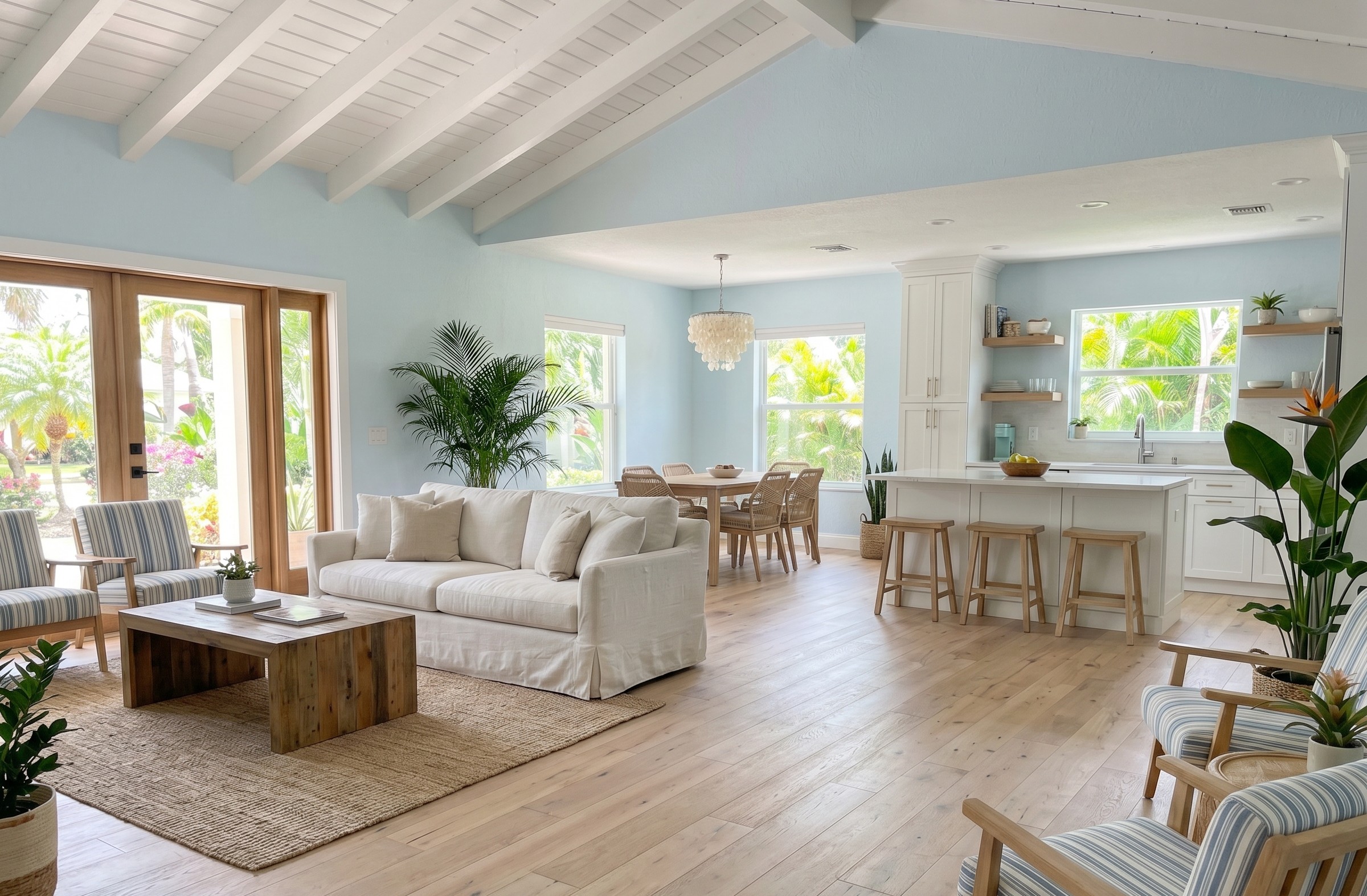
Hardwood floors add undeniable value and warmth to a home, but environmental conditions in Southwest Florida determine which style handles the climate best. Homes in Naples and Fort Myers face moisture levels that fluctuate significantly between the rainy summer and the dry winter months. Selecting a plank that can handle these shifts is the difference between a floor that stays flat and one that begins to warp or gap.
Comparing Hardwood Construction and Moisture Stability
Internal structure determines how a hardwood plank reacts to local environmental pressure. Traditional solid wood and modern engineered wood respond differently to the vapor released by concrete slabs. Knowing how these materials are built helps you predict their performance over several decades of use.
The Behavioral Patterns of Solid Wood
Solid hardwood planks are cut from a single piece of timber that expands and contracts in one direction. High humidity levels often cause such boards to swell, creating visual changes like cupping, where the edges lift, or crowning, where the center humps upward. Natural wood fibers move significantly when exposed to the moisture levels common in Southwest Florida. Placing solid wood directly on a concrete foundation often leads to warping because the material cannot stabilize itself against the rising vapor. Most successful installations of solid timber work best in second-story rooms or in spaces with strict climate control.
The Stability of Engineered Hardwood Planks
Engineered hardwood uses a layered construction to counteract the natural movement of wood fibers. Cross-grain layers of plywood or high-density fiberboard are bonded beneath a real wood surface to provide structural balance. Multi-layer cores ensure that each plank remains dimensionally stable even when humidity levels spike during the rainy season. You can install these products directly over concrete slabs using a glue-down method, making them a versatile choice for ground-level layouts. Stability comes from the way the underlying layers pull against each other to prevent the surface from shifting or gapping.
Maintaining an Authentic Appearance with Real Wood Surfaces
Real wood surfaces provide the same warmth and character regardless of the underlying core construction. Wear layers on engineered planks are cut from the actual species you select, such as white oak, hickory, or walnut. Underfoot, the texture and sound are indistinguishable from solid wood when the subfloor is properly leveled. Knots, grain patterns, and natural color variations appear exactly as they would in a solid plank. Homeowners get the aesthetic of a classic timber floor with a structural design built specifically for the local climate.
Evaluating the Long-Term Investment of Multi-Layer Flooring
Longevity depends on the thickness of the wear layer rather than the total thickness of the plank. Thick top layers on engineered products allow for professional sanding and refinishing multiple times over the life of the floor. Lifespan for these surfaces often spans several decades, matching the performance of solid wood in a residential setting. Factory-applied finishes are frequently tougher than those applied on-site, offering a durable shield against daily foot traffic and pets. Choosing a high-quality engineered product ensures your investment stays beautiful and functional through years of wear.
Selecting Wood for the Southwest Florida Environment
Deciding on a specific species involves analyzing the lighting and moisture levels in your particular home. We have spent decades monitoring how different wood products perform in the Fort Myers and Naples area. Our team recognizes how local humidity affects the way natural materials behave over time.
Visit our showrooms to see large-scale samples of engineered hardwood in person. Seeing the variations in species like maple or oak is the most effective way to visualize how they will look in your layout. Contact us to schedule a consultation or to ask questions about which wood construction fits your project needs.


